
BMW iX3 review Australia: 50 xDrive range, charging and practicality
The BMW iX3 50 xDrive is the first production model from BMW’s Neue Klasse generation, and it approaches the electric family SUV brief with unusually ambitious numbers: a 108 kWh battery, dual-motor all-wheel drive, up to 805 km of claimed WLTP range and charging hardware designed for 400 kW sites. Those figures matter in Australia, where long distances and uneven charger coverage can make an efficient, fast-charging SUV easier to live with than a smaller car that needs frequent stops.
Free EV toolsThinking about the BMW iX3?
Here’s how the BMW iX3 range lines up today. Compare it with every other new EV in Australia, then see what it would really cost you on a novated lease.
| Variant | Price | Range |
|---|---|---|
| 40 | $89,900 | 635 km |
| 50 xDrive | $109,900 | 805 km |
Prices are before on-road costs. Range is the claimed WLTP figure.
Compare it with every EV
Put the iX3 next to every new EV on sale in Australia. Compare price, range, battery, charging speed and home charging cost, and line up to four cars side by side.
Work out a novated lease
See what the iX3 would cost you per pay on a novated lease, compared with a petrol car or buying outright. Eligible EVs are exempt from fringe benefits tax, so the whole cost can come from your pre-tax salary.
Free to use. Both tools open in a new tab.

BMW iX3 variants and Australian positioning
BMW Australia’s launch model is the iX3 50 xDrive. It is a five-seat, dual-motor SUV rather than a choice of small and large batteries. That simplifies the buying decision, but it also means the iX3 sits at a premium price point from the outset. BMW has indicated that the Neue Klasse family will expand, and an M60 xDrive performance version is planned for a later stage, but the 50 xDrive is the version Australian shoppers can assess now.
| Specification | BMW iX3 50 xDrive |
|---|---|
| Drive system | Dual-motor all-wheel drive |
| Peak system output | 345 kW |
| Peak torque | 645 Nm |
| 0–100 km/h | 4.9 seconds |
| Battery | Approximately 108 kWh usable-class battery |
| WLTP range | Up to 805 km, dependent on wheels and conditions |
| Maximum DC charging | Up to 400 kW at a compatible charger |
| DC 10–80% claim | About 21 minutes in optimum conditions |
| Seats | Five |
| Body style | Medium luxury electric SUV |
Range and charging: the iX3’s defining advantage
The headline range is the iX3’s strongest practical argument. An 805 km WLTP result is a laboratory figure, not a promise of 805 km in every Australian trip. Highway speed, headwinds, roof loads, cold weather, air-conditioning and wheel choice all affect consumption. Even so, the large battery and BMW’s sixth-generation eDrive efficiency give the iX3 more buffer for regional travel than most similarly sized electric SUVs.
Charging is equally important. BMW quotes up to 400 kW DC input and a 10–80 per cent session of roughly 21 minutes when the vehicle is connected to a sufficiently powerful charger. Australia’s public network will not always provide that rate, so the real benefit is flexibility: on a 150 or 350 kW site the iX3 can still charge quickly, while at home an AC wallbox is more relevant for overnight replenishment. Owners should plan around the charger available on their regular routes rather than assume every stop will deliver the maximum.

Powertrain and road manners
With 345 kW and 645 Nm, the iX3 50 xDrive is genuinely quick for a family SUV. The dual-motor system gives it all-weather traction and strong overtaking response, while the 4.9-second 0–100 km/h claim places it in performance-car territory. The useful distinction is that the power is available without an engine revving or a gearbox changing; acceleration is immediate and quiet.
BMW’s new “Heart of Joy” control architecture is intended to coordinate propulsion, braking and stability systems more quickly. That should help the iX3 feel composed rather than simply powerful. Buyers who value a polished, rear-biased BMW feel should still arrange a drive, because steering weight, ride tuning and tyre choice influence the character more than headline figures do. The vehicle’s size and battery mass also mean it will not feel like a light hatchback on tight suburban roads.
Cabin, comfort and technology
The cabin introduces BMW’s Panoramic iDrive interface, combining a wide projection across the lower windscreen with a central touchscreen and voice control. The aim is to put navigation and driving information in the driver’s sightline while keeping the central display available for maps, media and settings. It looks distinctive, but a first-time owner will need time to learn the menus and decide which information belongs in each zone.
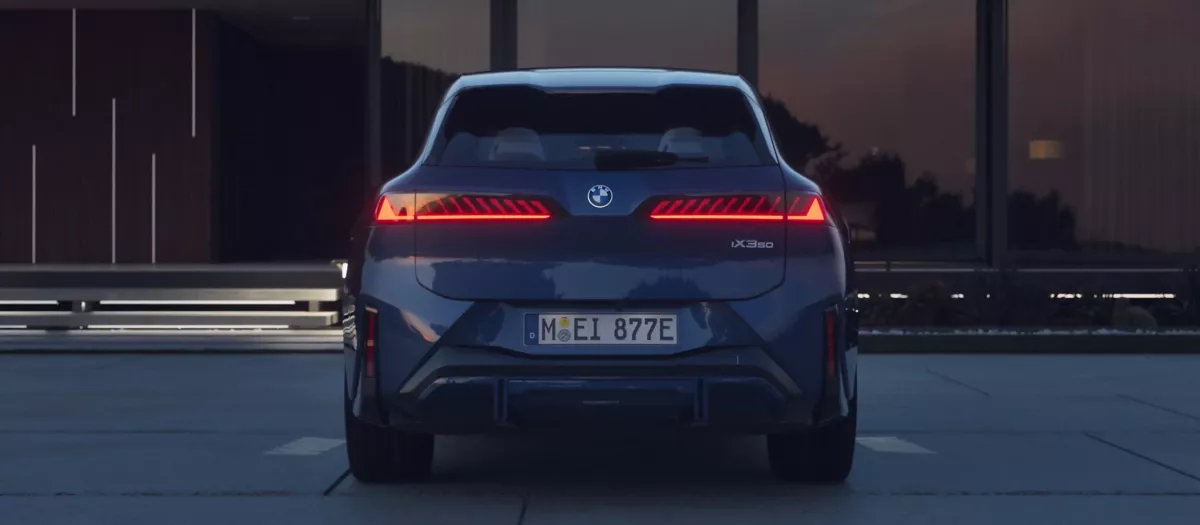
BMW’s sustainable-material strategy is visible in the simplified dashboard and upholstery choices. The flat-floor EV layout should make the front seats feel airy, and the iX3 remains a practical five-seater rather than a low crossover. Rear comfort will depend on how many adults use the second row and how much luggage is carried, so families should inspect the boot opening and child-seat access in person.
Safety and driver assistance
The iX3 is expected to carry BMW’s latest driver-assistance suite, with adaptive cruise, lane support, parking assistance and camera-based surroundings monitoring. Equipment can vary by market specification and option pack, so the Australian build sheet matters more than an overseas brochure. These systems are aids, not autonomous driving: the driver remains responsible for supervision, weather limitations and road-rule compliance.
Ownership considerations in Australia
The iX3 suits households that can charge at home, travel between cities and want a premium SUV with a large range reserve. Its efficiency and fast-charging capability can reduce the inconvenience of longer trips, while over-the-air software support should keep the interface current. BMW’s dealer network is a reassuring factor for buyers who prefer an established luxury brand.
For apartment residents, the ownership question is less about battery capacity than access to a dependable socket. A regular AC connection at work or home can add useful range gradually, whereas relying entirely on public DC chargers may increase trip planning and running costs. Prospective buyers should also check whether their preferred BMW dealer can install or recommend a compliant home charging solution, and ask how roadside assistance operates when the battery is low.
That preparation is especially valuable for regional owners who may be hundreds of kilometres from a BMW workshop or a high-output charger.
The limitations are just as clear. The car is expensive, large and heavy, and the quoted range depends on conditions that rarely match a controlled WLTP test. High-power charging is only useful where a compatible station exists, and replacement tyres, insurance and servicing may cost more than for a mainstream EV. The minimalist interface may also frustrate drivers who prefer physical buttons for every function.
Strengths
- Exceptional claimed range for a medium luxury SUV.
- Very strong dual-motor performance with all-wheel drive.
- 400 kW DC capability creates short charging stops at suitable sites.
- Distinctive Neue Klasse cabin and software architecture.
Limitations
- Large battery and premium equipment bring a high purchase price.
- 805 km WLTP is not a guaranteed real-world distance.
- 400 kW charging depends on charger availability and battery temperature.
- Touch-heavy technology may require a learning period.
Verdict
The BMW iX3 50 xDrive is one of the most convincing long-distance electric SUVs on paper. Its combination of range, all-wheel-drive traction, rapid charging and strong performance addresses the main objections Australian buyers raise about EVs. It is best suited to drivers who can install home charging and regularly travel beyond the city. If your driving is mostly short urban trips, or if value and simple controls matter more than premium technology, a smaller and less expensive EV may be the smarter choice. For buyers who want a high-end electric SUV with genuine touring potential, the iX3 deserves a close look alongside the TrolleySaver EV comparison.
Specifications and availability can change by Australian model year, wheel choice and option pack. Confirm the final build, pricing, charging access and warranty terms with BMW Australia before ordering.
